

Cummins ISX Common Failures: An OEM-Certified Shop's
Cummins ISX common failures can cost fleets thousands in downtime if left unchecked. From EGR cooler leaks and injector problems to turbo and camshaft wear, understanding the warning signs early helps prevent breakdowns, expensive repairs, and lost productivity on the roa

Cummins ISX common failures show up week after week on trucks working the busy corridors around Atlanta and across the Southeast. Coolant disappears without a puddle on the ground. Power drops right when a driver needs it most. Check engine lights come on during a hot run down I-75 through Georgia.
These are not random issues. They follow patterns we see on regional hauls out of Atlanta, long-haul moves through the busy connectors, and trucks working hard in stop-and-go conditions. This guide walks through the failures that cost fleets and owner-operators the most time and money. You will find clear symptoms, the exact checks our technicians perform, and practical steps to catch problems before they strand a truck or force an expensive tow.
Why These Cummins ISX Common Failures Keep Happening
The ISX platform handles serious power and torque, but the emissions systems added after 2002 put extra stress on key components. EGR coolers cycle hot exhaust gas against coolant. Variable geometry turbos deal with constant soot and carbon. High-pressure fuel systems run at extreme pressures. When trucks idle more than they should, or oil changes stretch past recommended intervals, wear accelerates fast.
Fleets running the I-75 and I-85 corridors around Atlanta see it often. Heat, heavy loads, and frequent short trips all take a toll. Owner-operators who keep their trucks moving every day notice small changes first — a slight drop in fuel economy here, a new ticking sound there. Those early signals matter.
EGR Cooler ISX Failures – The Coolant Thief Most Drivers Miss First
EGR cooler problems top the list of Cummins ISX common failures we diagnose. The cooler cracks internally and lets coolant into the exhaust or intake tract. You lose coolant but never see it on the ground.
Common symptoms
● Coolant level drops steadily with no external leaks
● White or sweet-smelling exhaust residue
● Overheating on grades or in traffic
● Power derate and check engine light
● Fault codes tied to EGR flow or temperature
How we diagnose it in the shop
Start with a simple coolant consumption test. Mark the level cold, run the truck under normal load for a few days, and measure what disappears. On Atlanta-area trucks, we often see a quart lost every two to four days when the EGR cooler isx starts to fail.
Next, pull the charge air hose on the driver's side and check inside for wetness or residue. Remove the EGR crossover tube and look for coolant sitting in the passage. These two checks catch most failures before we move to pressure testing or borescope inspection of the cooler itself.
If the truck already shows derate, we connect the diagnostic software and look for codes related to EGR performance. The combination of unexplained coolant loss plus those codes almost always points straight to the cooler.
Repair reality
Replacement usually falls in the $1,200–$2,000 range, depending on parts and shop time. We always inspect the EGR valve and related piping at the same time because carbon buildup often travels with a failing cooler. Ignoring it leads to turbo damage or injector issues downstream.
Cummins ISX Fuel Injector Problems – What the Injector ISX Diagnostic Actually Shows
Fuel injector failures hit hard on high-mileage ISX engines. Drivers notice rough idle first, then power loss under load and rising fuel use. Some trucks start missing on one or two cylinders and throw the driver into a frustrating derate cycle.
What we look for
● Rough or uneven idle that smooths out after a few minutes
● Black or white smoke on acceleration
● Noticeable drop in fuel economy
● Hard starting when warm
● Balance rates outside normal range during testing
Shop diagnostic steps
This is the exact injector isx diagnostic process our technicians run on every truck that comes in with rough idle or power complaints. We use the right software to run an injector contribution or balance rate test. Each cylinder gets isolated, so we see exactly which one is weak. We also check exhaust gas temperatures at the manifold with an infrared thermometer. A cold cylinder stands out immediately.
Visual inspection comes next. We remove the valve cover and check injector hold-downs for looseness and look for fuel leaks around the cups. Contaminated fuel or extended filter change intervals often sit behind these failures. One practical step we recommend: drain the fuel-water separator daily on trucks that fuel at high-volume stops along busy corridors.
Replacement costs vary. One injector plus labor runs a few hundred dollars. A full set on an ISX usually lands between $2,400 and $3,600. We always advise checking the high-pressure fuel pump and lines at the same time because debris from a failing injector can travel.
Turbocharger and VGT Problems on ISX Engines
Variable geometry turbo issues show up as lag, poor boost, and regen problems that never seem to finish. Carbon and soot stick to the vanes or damage the actuator. Trucks that spend time in traffic or short-haul work around Atlanta feel this faster than pure highway units.
Technicians check boost pressure with a gauge or through live data. We command the actuator through its full range and watch for sticking. A quick visual inspection of the compressor wheel and housing often reveals oil slobber or damage from a previous EGR cooler failure.
Repair can mean actuator replacement, full turbo swap, or cleaning when caught early. Prevention comes down to proper shutdown procedures — let the turbo cool down before killing the engine after a hard pull.
Camshaft, Rocker Arm, and Timing Issues
Ticking or knocking from the valve cover area often traces back to camshaft lobe wear or rocker arm problems. Extended oil drain intervals and soot in the oil starve the upper end of lubrication. We see this on trucks that log serious miles between services.
Diagnosis starts with valve lash measurement and oil analysis for metal particles. Live data sometimes shows cam-crank correlation faults. When we open the engine, we frequently find flattened lobes and worn rocker rollers that should have been caught earlier with regular oil sampling.
This repair usually happens alongside other work because access requires a significant teardown. Prevention is straightforward: stick to recommended oil change intervals and use oil analysis every 15,000–20,000 miles, especially on trucks that idle heavily.
Other Common Cummins ISX Failures Worth Watching
Cylinder liner issues and high-pressure fuel pump problems appear less often but cause major damage when they hit. Dropped liners usually show up as coolant in the oil or sudden power loss. Fuel pump failures send debris through the entire fuel system and often require extensive cleaning or replacement of injectors and lines.
Cooling system leaks at the water pump, thermostat housing, or oil cooler also create headaches. We check these during every major service because one small leak can lead to overheating and secondary failures.
When an ISX Rebuild Makes Sense
Not every failure needs a full rebuild. We look at the whole picture: total mileage, how many major components are already worn, oil analysis history, and what the truck still needs to earn. A truck with one failed EGR cooler and otherwise strong numbers usually gets a targeted repair. Multiple failures plus metal in the oil or high crankcase pressure often point toward in-frame or out-of-frame work.
A quality rebuild restores compression, replaces worn rotating assembly parts, and brings the engine back to reliable service. For many fleets operating in Georgia, an ISX rebuild becomes the smarter long-term decision when multiple systems are worn. We always discuss the full cost, expected downtime, and warranty so you can make the call that fits your operation.
How We Approach Cummins ISX Diagnostics in an OEM-Certified Shop
Every truck that comes in gets a structured process. We start with your description of what changed and when. Then we pull codes and freeze-frame data. Visual inspection and basic tests follow — coolant level, boost, exhaust temperatures, and fuel pressures.
We use factory-level tooling and software because guesswork costs everyone time. The goal is root cause, not just replacing the part that failed today. That approach keeps trucks moving longer and protects your maintenance budget.
Preventive Maintenance That Actually Works on ISX Engines
Small habits prevent most of the failures covered here.
● Check coolant level cold every week and track consumption
● Drain the fuel-water separator daily or at every fuel stop
● Follow oil change intervals strictly and add oil analysis
● Allow proper cooldown after heavy loads or long grades
● Address check engine lights the same day they appear instead of waiting for derate
Here is a simple schedule many of our fleet customers follow:
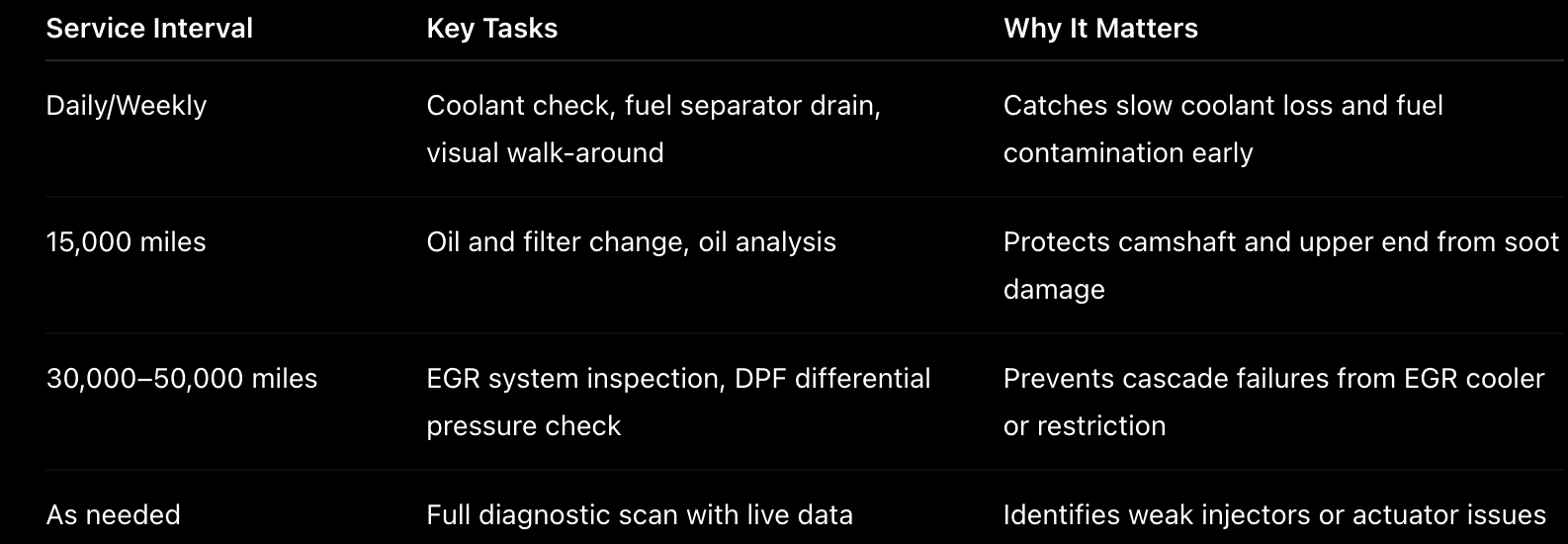
Why an OEM-Certified Shop Changes the Outcome
Factory training and the right tooling let us diagnose faster and more accurately. We see the same failure patterns across hundreds of trucks, so we know which checks give answers quickest. Genuine or high-quality replacement parts plus documented procedures mean the repair lasts.
Whether your trucks run the I-75 corridor through Georgia, handle drayage near the ports, or work regional routes out of the Atlanta area, the goal stays the same: catch issues early, fix them right, and keep the truck earning. Our teams across partner locations bring that same standard to every job.
Frequently Asked Questions About Cummins ISX Issues
What is the most common Cummins ISX failure?
EGR cooler leaks top the list for trucks we see daily. Unexplained coolant loss with no external leaks is the classic sign.
How do you confirm an EGR cooler is bad on an ISX?
We combine a coolant consumption test, visual inspection of the charge air hose and EGR crossover tube, and diagnostic software codes. Most cases are clear within the first hour of testing.
What do failing injectors feel like on an ISX?
Rough idle, power loss under load, smoke, and rising fuel use. A balance rate test or exhaust temperature check pinpoints which cylinder is weak.
Is a rebuild worth it on a high-mileage ISX?
It depends on the rest of the engine’s condition. We review oil history, compression, and overall wear before recommending rebuild versus targeted repairs or replacement.
How can fleets reduce these problems?
Consistent preventive maintenance, daily fluid checks, and addressing warning lights immediately cut downtime dramatically. Trucks that follow a disciplined schedule simply spend less time in the shop.
Locations & Contact
Get in touch today to schedule your vehicle in for service.